Tips that save time.

The quest for the best AI web design tools is more relevant in 2023 than ever before. As artificial intelligence continues to evolve, it’s redefining various industries, including web design. Gone are the days when you needed to spend hours perfecting your website’s layout, choosing color schemes, or optimizing user experiences. Today, AI tools can automate many of these tasks, providing highly efficient and aesthetically pleasing results that even seasoned designers would applaud.
But with the plethora of options available, how do you choose the best AI web design tools for your needs?
In this post, we’ve curated a list of top-performing AI-based design tools that are both user-friendly and packed with powerful features. Whether you’re a professional designer or a high school student dabbling in web development, these tools offer a streamlined approach to web design that can save you time and effort.
So, let’s dive in and explore how these innovative tools are changing the face of web design as we know it.
Here are the 20 best AI web design tools available today:
10Web
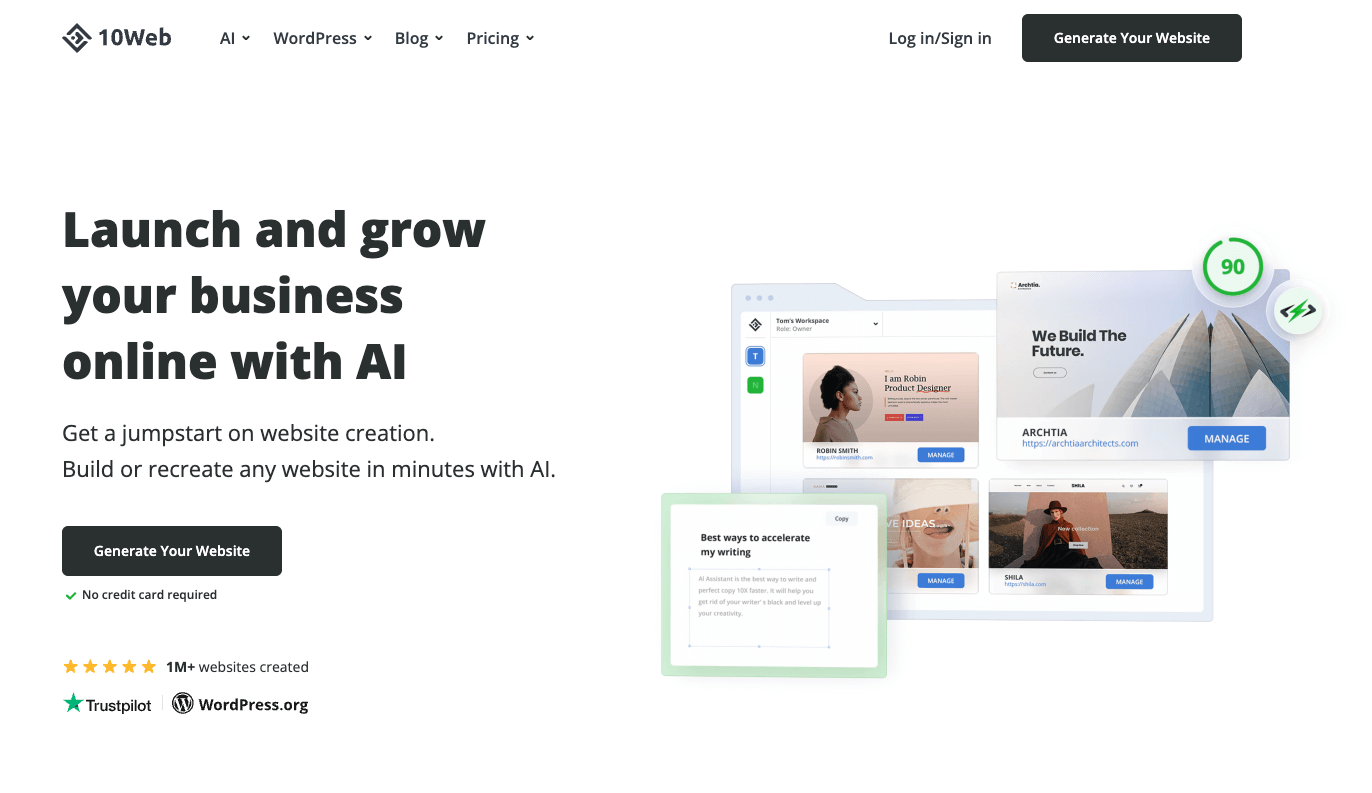
10Web is an all-in-one platform that leverages AI to simplify website creation and management, making it one of the best AI web design tools of them all.
Whether you’re starting from scratch or looking to revamp an existing site, 10Web’s AI Website Builder can generate content and images tailored to your needs. The platform also offers an AI Ecommerce Website Builder, automated hosting powered by Google Cloud, and a PageSpeed Booster to optimize your site’s performance.
With a focus on user-friendliness, 10Web also provides a drag-and-drop editor and a variety of premium widgets to customize your site. It’s a versatile solution for businesses of all sizes, offering everything from AI-generated marketing strategies to SEO-optimized content creation.
AI Website Builder by Hostinger
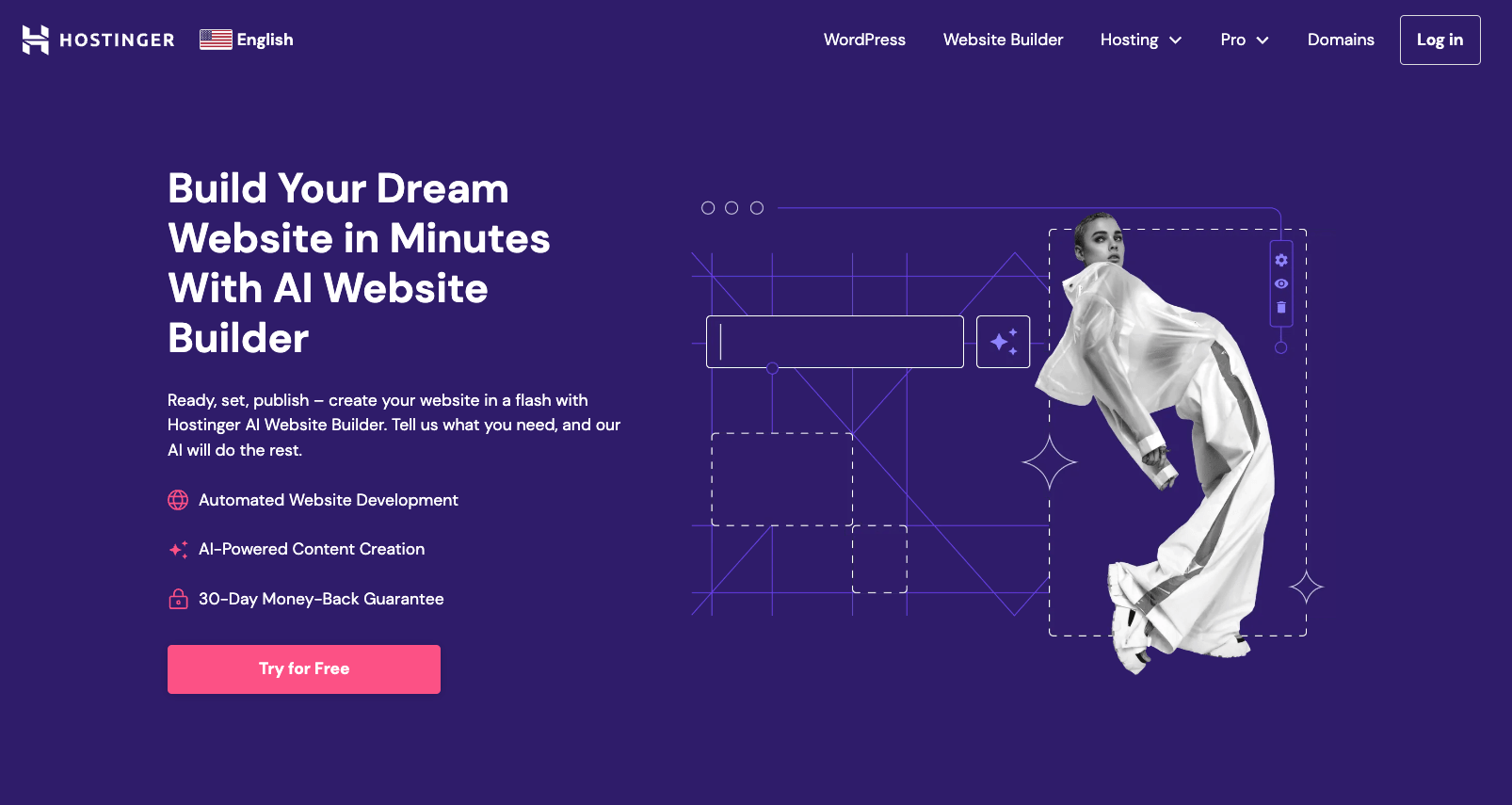
Hostinger’s AI Website Builder is a comprehensive platform that enables you to create a website in just a few simple steps. The AI-powered tool takes your brand name, website type, and business description to generate a custom site tailored to your needs.
It offers a 30-day money-back guarantee and a drag-and-drop editor for easy customization. Additional features include built-in AI tools like an AI Logo Maker and AI Writer, as well as SEO optimization tools. The platform is designed to be user-friendly, requiring no coding skills.
Pricing starts at $2.99 per month, and 24/7 customer support is available to assist you at any time.
Wix ADI
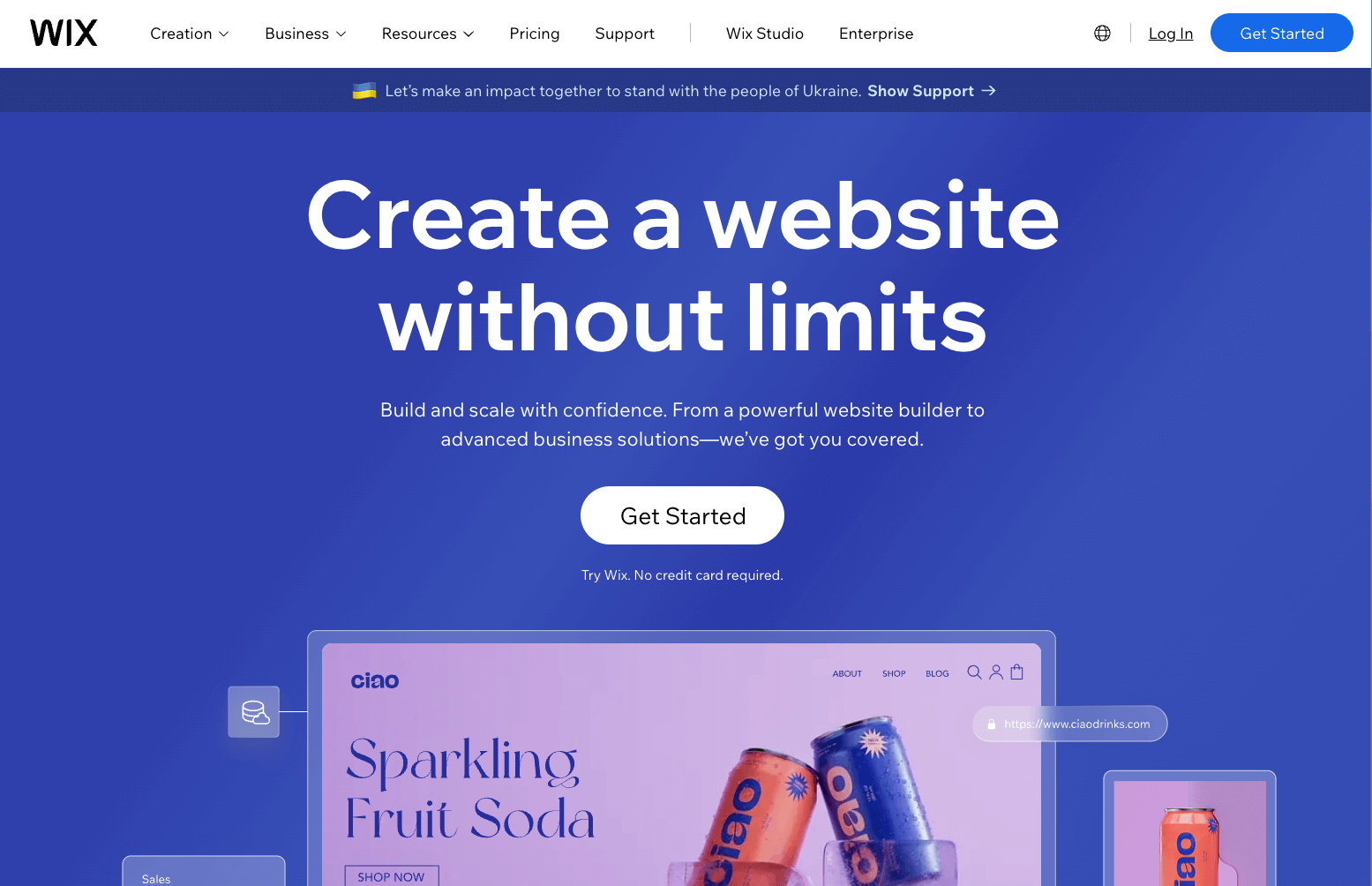
Wix ADI (Artificial Design Intelligence) is a streamlined website builder that uses AI to create websites quickly and efficiently. Hosted on the all-in-one Wix platform, ADI works by asking you a series of questions about your business and the type of website you need. It then scans the web and social media to gather information about your brand, using this data to generate a website that aligns with the brand’s colors and style.
While it offers less customization compared to its counterpart, the flagship Wix Editor, Wix ADI is ideal for those looking to get a website up and running in a short amount of time. You can still make basic changes to the style, add sections, and edit content as needed.
GitHub Copilot

GitHub Copilot serves as your AI-assisted coding partner, seamlessly integrating into your preferred text editor. Trained on a vast dataset of code (billions of lines, they say), this tool can interpret natural language prompts to offer real-time coding suggestions in multiple languages.
It’s designed to accelerate the development process by automating repetitive tasks and boilerplate code, allowing you to focus on more complex problems. Whether you’re a seasoned developer or just getting started, GitHub Copilot can adapt to your project’s context and style conventions, making it a versatile AI web design tools for any coding endeavor.
Copilot is especially useful for those who are coding in unfamiliar languages or frameworks, as it provides contextual suggestions based on the project you’re working on. GitHub Copilot offers different pricing plans to suit individual developers and larger organizations.
Zoo
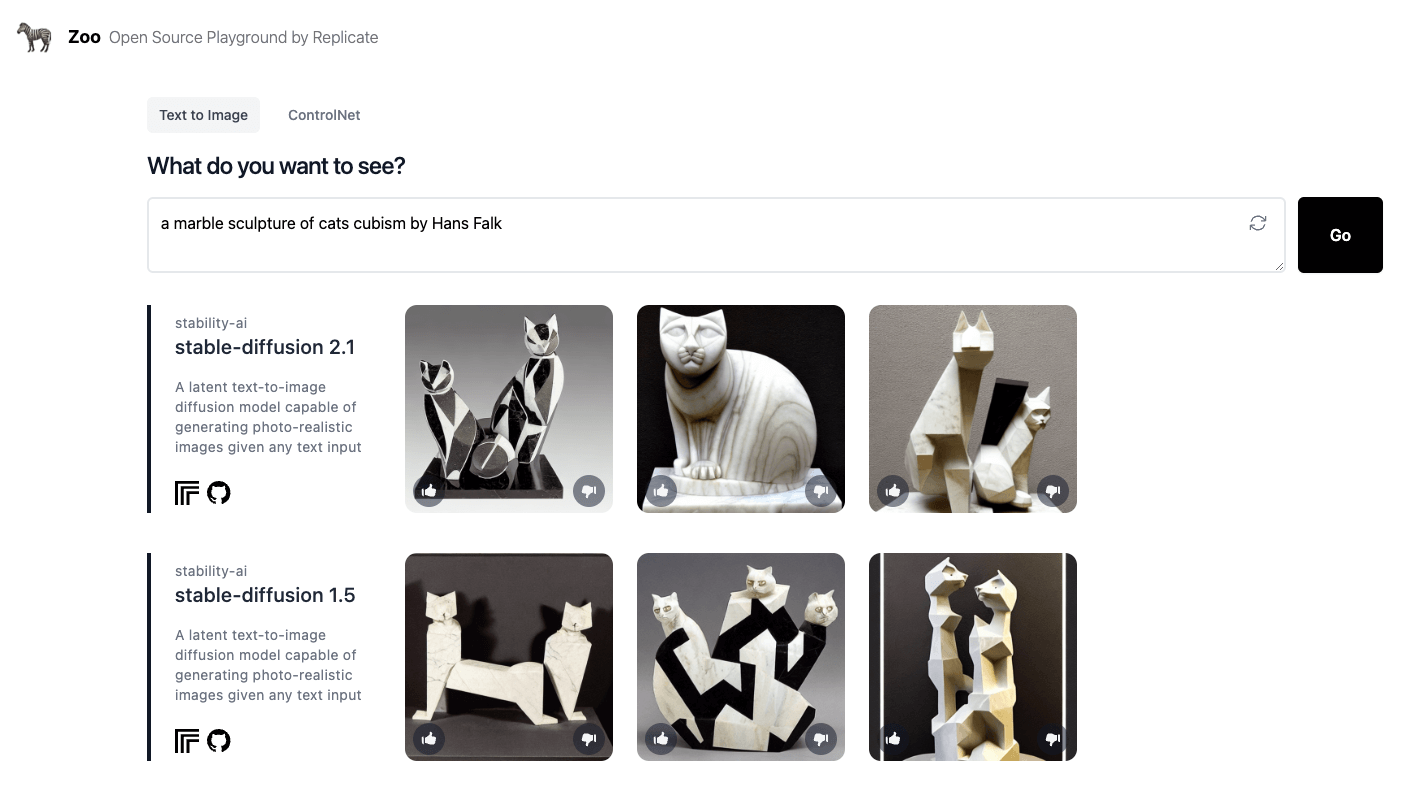
Zoo by Replicate is an open-source playground for text-to-image models. It offers a variety of AI models capable of generating photo-realistic images based on text input.
Whether you’re interested in creating art or realistic images, Zoo provides different models like “stable-diffusion” and “DALL-E 2” to suit your needs. These models are trained on extensive datasets and fine-tuned for high-quality output.
With a simple interface, you can easily input text and see the generated image in real-time. It’s a versatile tool for anyone interested in exploring the capabilities of text-to-image AI models.
Framer AI
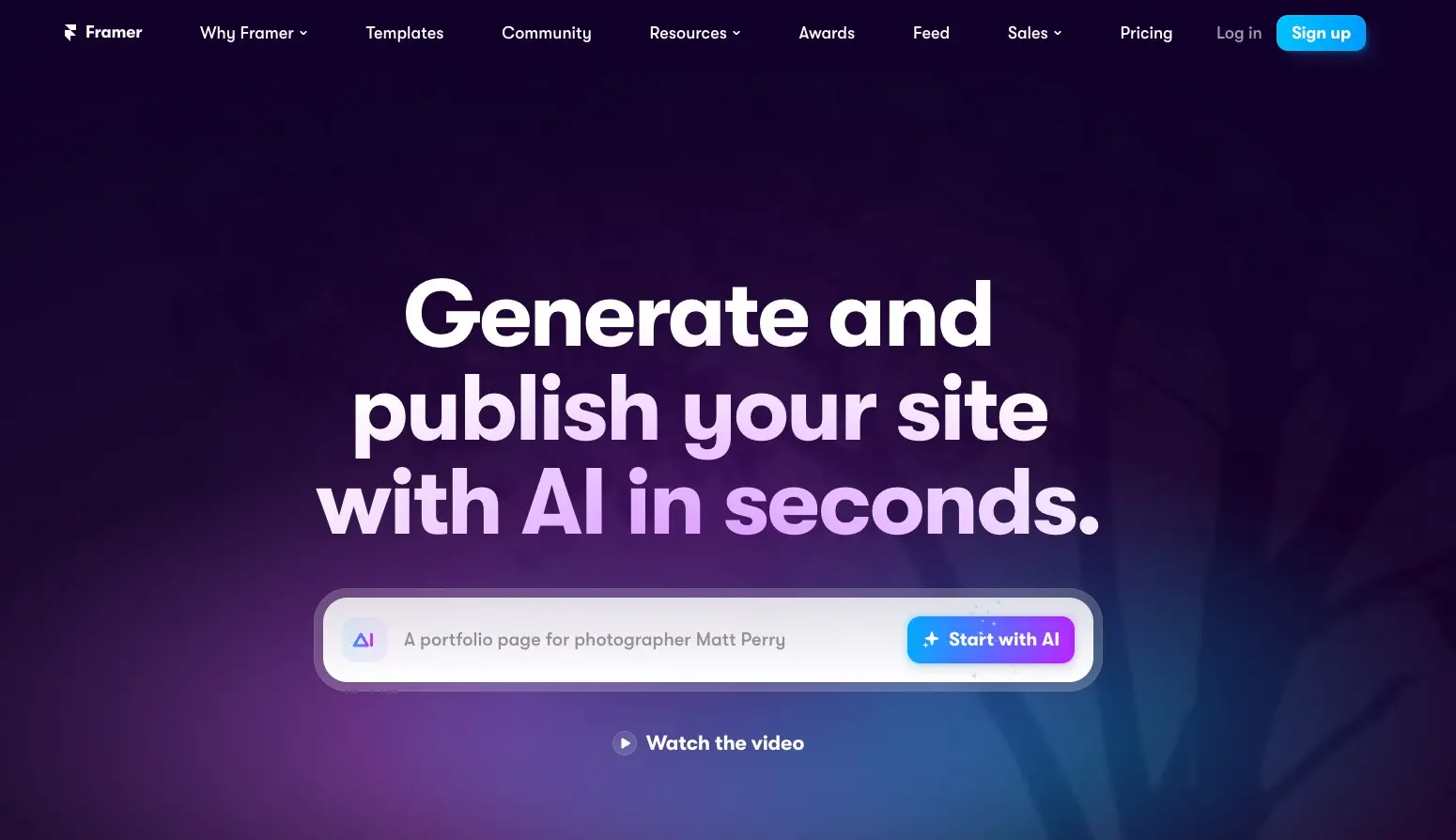
Framer AI earned its spot on our list of the best AI web design tools due to its ability to help you generate and publish websites in a matter of seconds. It uses artificial intelligence to create unique combinations of layout, copy, and styling based on the details you provide.
You maintain full control over the design, with the ability to tweak elements to your liking. The platform also offers a built-in copywriting feature that enhances your website’s text.
With Framer AI, you get access to unlimited projects, free templates, and an active community of users. It’s compatible with both Mac and Windows and offers a range of tutorials to get you started.
Generative Fill by Adobe Photoshop
Generative Fill is one of the cool new features of the fan favorite Adobe Photoshop suite. It allows you to quickly create or modify images using simple text prompts.
Powered by Adobe Firefly generative AI, this tool gives you the ability to add, remove, or extend content in images. Whether you’re looking to change a background, update an outfit, or add new objects, Generative Fill makes it possible in just a few keystrokes.
The feature integrates seamlessly into Photoshop, allowing you to fine-tune AI-generated additions on separate layers. It’s designed to save you time while offering high-quality, photorealistic results that require minimal editing.
NVIDIA Canvas
NVIDIA Canvas is an AI-powered graphics app that transforms simple brushstrokes into realistic landscape images. This can be a great AI web design tool for you whenever you’re in need of a quality background image, for instance.
Designed to speed up concept exploration, the tool allows you to create backgrounds quickly so you can focus more on tuning up the rest of your design. The app offers a palette of real-world materials like grass and clouds, and its AI model instantly turns your shapes and lines into stunning visuals. You can also customize your image with various styles and materials, and even create 360° panoramas.
Mixo
Mixo is another AI-powered website builder designed to help entrepreneurs quickly launch and validate their business ideas. With just a brief description, Mixo can generate an entire website, including stunning landing pages, in seconds.
The platform also offers built-in email waiting lists and subscriber management tools, making it easier to connect with your audience and gather valuable feedback. Whether you’re pre-launching products, running beta tests, or simply validating new ideas, Mixo provides all the essential features you need.
LeiaPix Converter
LeiaPix Converter is a unique one among our best AI web design tools. It allows you to transform your standard images into captivating depth animations.
The tool is designed to be user-friendly, requiring you to simply sign in and upload your images to start the conversion process. While the website is sparse on details, the focus is clear: to elevate your visual content from mere seeing to a more immersive feeling. Ideal for those looking to add a touch of 3D magic to their websites.
AutoDraw
AutoDraw is a really cool web-based tool that takes your rough drawings and helps you transform it into what you actually wanted to draw in the first place. It basically makes you more talented at drawing.
The platform is designed to be user-friendly, requiring minimal effort to start drawing. As you sketch, AutoDraw’s AI algorithms recognize your doodles and offer suggestions of professionally drawn versions that closely match your input. This makes it easier for those who may not be artistically inclined to create visually appealing drawings. With options to download and share your creations, AutoDraw is a convenient tool for quick sketches, whether you’re designing a logo or just doodling for fun to put something original on your website.
Restore Photos IO
Restore Photos is an AI-powered platform that specializes in fixing old and blurry photos. This can be a great web design tool whenever there’s a given photo that you really want to use in your design, but the photo is of sub-par quality.
The process is straightforward: upload your old photo and let the AI work its magic to produce a restored version. The service is entirely free and has received positive reviews for its speed and effectiveness. Powered by Replicate, Upload, and Vercel, Restore Photos is a go-to solution for anyone looking to breathe new life into their dated photographs.
Spline AI
Spline AI is bringing the capabilities of artificial intelligence to the realm of 3D design. The platform allows you to generate 3D objects, animations, and textures simply by using text prompts. Whether you’re looking to create a grid of cubes or add physics to a scene, Spline AI aims to make the design process faster and more intuitive. You can also modify objects, apply materials, and add lighting to your creations.
The tool is currently in its alpha stage, with a waitlist for those interested in early access. Ideal for web designers who want to experiment and collaborate in real-time, Spline AI offers a new way to bring your 3D ideas to life.
Vectorizer AI
Vectorizer AI is a tool that specializes in converting bitmap images like JPEGs and PNGs into scalable vector graphics (SVGs). The platform uses AI algorithms to analyze and process your image, transforming it from a grid of pixels into geometric shapes.
This allows the resulting vector image to be scaled without losing quality. The tool is currently in its beta stage and is free to use. It supports a variety of input and output format. Ideal for those who need high-quality vector images for their website design but only have the rasterized versions of the graphics, Vectorizer AI aims to make the conversion process quick and effortless.
60sec.site
60sec.site is a no-code website builder that enables you to create a landing page in just one minute. The platform uses AI to generate content and design based on your brief description of a product, service, or idea.
It offers built-in features like email collection forms, SEO optimization, and various call-to-action options. You can also integrate your landing page with popular tools like Google Analytics and Facebook Pixel. With a focus on speed and simplicity, 60sec.site is ideal for entrepreneurs and marketers looking to quickly validate business ideas or promote products. The platform offers both free and paid plans, starting at $10/month for advanced features.
VMake Video Enhancer
VMake Video Enhancer is an online tool designed to upgrade the quality of your videos. It uses AI to automatically upscale video resolution, adjust brightness, contrast, saturation, and sharpness.
The platform supports various video formats like MP4, MOV, and M4V. Once your video is processed, you can preview the enhanced quality and choose the file format for export.
VMake aims to improve brand perception and customer engagement by delivering high-quality visuals. Whether you’re looking to restore old videos for website use or optimize new ones, VMake offers a straightforward solution to enhance video quality and make your brand stand out.
PhotoEditor.AI
PhotoEditor.AI is a free, AI-powered photo editing platform that offers a range of features to enhance your images. The tool allows you to remove unwanted objects, text, or even people from your photos with just a few clicks.
It also offers a face enhancer to eliminate blemishes and wrinkles. The platform supports multiple image formats like JPG, PNG, and WEBP, and allows you to download the edited images in high-quality resolution. It’s accessible on both web and mobile, making it convenient for editing on the go, too.
AirBrush AI
AirBrush AI Headshots offers a quick and affordable solution for generating professional corporate headshots without the need for a physical photo shoot. The platform uses AI algorithms to create high-quality headshots, complete with a variety of backdrops and clothing options.
Important note; this tool doesn’t generate fake personas, but instead uses your actual pictures to give you a better looking profile picture based on them.
The process is simple: choose a headshot style, upload your selfies taken in different settings and expressions, and receive your headshots via email within about 60 minutes. The service is versatile, suitable for team pages, LinkedIn profiles, business cards, and more.
DreamWave AI Headshots
An alternative to the previous tool on the list, DreamWave AI Headshots is a platform that offers natural-looking AI-generated headshots in just two hours. Developed by a team of experts from MIT and Google Brain, the service aims to provide high-quality headshots without the artificial look commonly associated with AI.
The platform is currently offering a limited-time deal of $39 for 60 photos. Users have praised the platform for its realistic and flattering angles, as well as its ability to save time and money compared to traditional photoshoots. With over a million AI headshots created, DreamWave is becoming a go-to solution for those in need of professional-looking headshots.
Jasper AI
Jasper AI is a versatile content creation tool designed to assist marketing teams and businesses. While it’s not an AI web design tool strictly, all websites need content, and this is where it can come incredibly handy.
With a focus on brand voice, Jasper can generate on-brand content for various niches and types of websites and blogs. Users have reported significant time savings on first drafts. The tool also offers collaboration features, allowing teams to work together in real-time.
Jasper’s AI engine pulls from multiple models, including OpenAI’s GPT-4, and can be customized to include SEO and grammar optimization. With robust security features and a large community of users, Jasper aims to be a reliable and effective tool for content creation.
Conclusion on the best AI web design tools
The landscape of web design has been significantly transformed by the advent of AI tools, making it easier than ever to create stunning websites, enhance images, and even generate professional headshots. Whether you’re a seasoned designer or just starting out, these tools offer a range of features that can save you both time and effort.
From all-in-one platforms like 10Web and Hostinger’s AI Website Builder to specialized tools like Generative Fill by Adobe Photoshop and NVIDIA Canvas, there’s something for everyone. While some tools focus on speed and efficiency, like Wix ADI and 60sec.site, others offer more customization and advanced features, such as GitHub Copilot and Zoo by Replicate.
The key takeaway here is that AI is not just a buzzword; it’s a practical solution that’s reshaping the way we approach web design. So, if you’re looking to step up your web design game, these best AI web design tools are definitely worth exploring.